Three ways to preach on difficult passages.
Many preachers know the feeling. You open the lectionary reading for Sunday and discover it’s one of the stories we often skip over in church. The Passover ends with the death of Egypt’s firstborn. The Red Sea closes over Pharaoh’s army. Joshua’s army marches around Jericho and the city falls in violence.
Violent passages and accounts of warfare in the Bible raise uncomfortable questions. People in our congregations may quietly wonder:Where is Jesus’ teaching about loving enemies in all of this? In a world already scarred by war - and where political leaders sometimes claim God is on their side - such texts can feel especially troubling.
Some Christians respond by avoiding these passages altogether. But if we want to build biblical literacy and honest discipleship, skipping the difficult parts isn’t the answer. Instead, we can learn to read and preach them wisely.
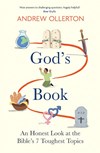 In my recent publication, God’s Book: An Honest Look at the Bible’s 7 Toughest Topics (Hodder & Stoughton), I suggest three principles for approaching challenging texts. They can help us engage passages about violence in Exodus, Joshua, and Judges with honesty and hope.
1. Read the Bible in Context
Every story has a setting.
A helpful starting point is remembering that the Bible was written for us, but not directly to us, as Old Testament scholar John Walton has put it. The stories of Moses and Joshua come from a world very different to our own – a world of tribal warfare and fragile societies where survival often depended on strength.
When critics say the Bible promotes violence, they often quote a verse or passage in isolation and ignore the ancient setting. But context matters.
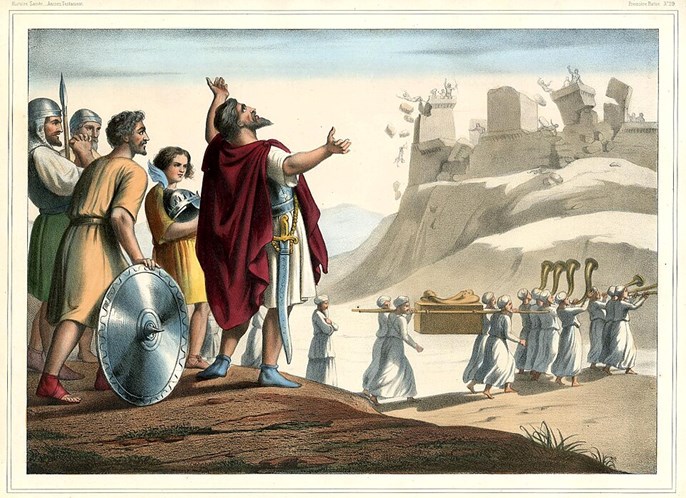
Take the famous story of Jericho. When we hear the word, we imagine somewhere like London or Manchester. In the ancient world, however, cities were usually small, fortified garrisons, more like military strongholds. Archaeologists suggest Jericho may have held only a few hundred people. Understanding that context changes how we imagine the scene. It also explains how the entire nation of Israel could march around it seven times in one day.
British Museum, Public domain, via Wikimedia Commons
Ancient war language also used rhetoric and exaggeration to capture emphatic victories. For example, the book of Joshua declares that the land was completely conquered, yet only a few chapters later it warns Israel about the Canaanites still living among them (Joshua 23:7, Judges 1:1). Like a football fan saying their team ‘annihilated the opposition,’ this was stylised victory language.
Most importantly, we must remember the bigger story surrounding these events. The Israelites were not a powerful empire expanding its borders. They were former slaves who had escaped oppression in Egypt and were returning to the homeland of their forefathers – Abraham, Isaac and Jacob.
Moreover, these events belong to a unique moment in Israel’s history. God’s people had been rescued from slavery in Egypt and were now called to function as a theocratic nation under the old covenant. Of course, this is no longer our chapter in the biblical story. The conquest narratives do not provide a blank cheque for future generations to wage war in God’s name.
That doesn’t remove every difficulty, but it helps us see these stories in a new light.
2. Read the Bible in Christ
Jesus is the centre of the story.
Another important principle is remembering that the Bible ultimately points to Jesus. After his resurrection, Jesus explained to two confused disciples ‘the things about himself in all the scriptures’ (Luke 24:27).
In other words, the Old Testament story moves toward Christ.
The Bible actually begins and ends with peace. Genesis opens in a garden where humanity lives in harmony with God and creation. Revelation ends with a renewed world where ‘death will be no more’ and every tear is wiped away (Revelation 21:4, NRSVA). The violence we encounter in the middle of the story is part of the problem God is addressing, not the goal of the story.
The cross of Christ reveals God’s ultimate response to violence. Instead of defeating his enemies by force, Jesus absorbs violence into himself. He breaks the cycle not through conquest but through sacrificial love.
This means we should read difficult passages through the lens of Christ. Whatever questions remain, we know the clearest picture of God’s character is found in Jesus -the one who taught his followers to love their enemies.
Interestingly, our discomfort with violent passages may itself be evidence of how deeply Jesus’ teaching has shaped us. In the ancient world, conquest and domination were often celebrated. Today many people instinctively recoil at such stories. That moral instinct owes much to the influence of Christ’s teaching across the centuries.
3. Read the Bible in Community
Wrestle with hard passages together.
In Acts 8, an Ethiopian official is reading the book of Isaiah but finds it confusing. When Philip asks if he understands what he’s reading, the man replies, ‘How can I, unless someone guides me?’ (Acts 8:31).
That moment captures something important about how Scripture works. Difficult texts often become clearer when we explore them together.
We need to create safe spaces where people can ask honest questions about the Bible. Young adults especially are quick to notice passages about violence or judgment. If the church avoids these topics, they may assume Christianity has no good answers.
 That’s why, alongside my latest book, I have developed Sermon and Small Group resources guides so we can wrestle with tough topics from Genesis to Revelation together in our congregations. In my experience, when we focus on difficult passages and topics, we give people permission to express honest doubts and we show that faith is not afraid of tough conversations. Our aim should not be to remove every tension but to help people read the Bible thoughtfully and faithfully in community.
Lean in, don’t skip over
So, when we encounter difficult passages about violence in the Bible, let’s see them as an opportunity to coach our congregations on some key principles that bring helpful perspectives:
- Read in context and we see the historical setting more clearly.
- Read in Christ and we see the direction of the whole story.
- Read in community and we don't have to wrestle with these questions alone.
And as we do, we may discover something surprising: the Bible’s difficult passages ultimately point us toward the same destination as its most comforting ones – toward the God who is guiding his world from conflict toward peace.
 Dr Andrew Ollerton is a pastor, theologian, popular communicator and author of The Bible Course, an eight-session guide to the big story of the Bible for small groups.