John Beauchamp, Diocesan Disability Ministry Enabler for the Diocese of London, who is blind himself, reflects on Jesus’ healing of a man born blind.
Introduction
Jesus’ healing miracles offered a fundamental challenge to the 1st century Jewish communities in which he lived. In a society where disability, sickness and sin were believed to be closely connected, the thousands of people who were walking, talking, hearing and seeing for the first time after encountering Jesus, challenged traditional assumptions about the righteous and unrighteous and God’s grace and punishment. And nowhere is this more vividly exposed than in the healing of the man born blind, as he is condemned as being ‘born entirely in sins’ (John 9:34).
A different mindset
Because of his blindness, this man has very few options in life. The inability to see, move about freely, engage in paid work or care for a family, means that he is left with only one option: to beg. He is the blind beggar who no doubt takes up a familiar and regular spot each day in the hope of benefitting from the generosity of passersby. And what we learn from his neighbours is that this is how they see him too: the blind man who sits and begs. For them, this is his identity. This is all they know about him. To them he has no identity beyond this. So much so, that when he returns from the ‘Pool of Siloam’ seeing, they don’t recognise him (v.19).
Jesus’ disciples show us that they are embedded in the same mindset as the neighbours. ‘“Who sinned,” they ask, “this man or his parents that he was born blind?”’ (v. 2). But Jesus’ response is a radical departure from this thinking. A radical departure from the traditional understanding of the time that physical, sensory or cognitive impairments were a sign of God’s displeasure and a punishment for personal or generational sin. ‘“Neither this man nor his parents sinned. He was born blind that God’s works might be revealed in him”’ (v.3).
Liberation and justice
It's easy for us to miss the significance of this statement. We don’t live in this 1st century world, and we don’t think of disability and sin in the same way. But what Jesus declares here in these words – and in his healing miracles more broadly – are two important things: liberation and justice. Liberation from the marginal places into which disabled people were pushed and justice as their previously unheard voices and stories take centre stage and their right to live a full and active life can no longer be denied to them. And we see this happening before us as this account from John 9 unfolds.
This man is no longer the blind beggar, but a fully-sighted man. He is no longer a faceless, voiceless, characterless man whose story is ignored and unknown, but rather he is now centre stage in his community, despite that community struggling to understand how this transformation has taken place.
Is healing the only route?
There is an important question here though. As Jesus declares that this man was born blind ‘so the works of God might be revealed,’ we have to ask, was healing the only route to this revelation, or could the works of God have been revealed through him if he had remained blind? It’s an important question for us as we consider how the Church can offer a ministry of healing and in how we see the place of disabled people within the life and ministry of the Church.
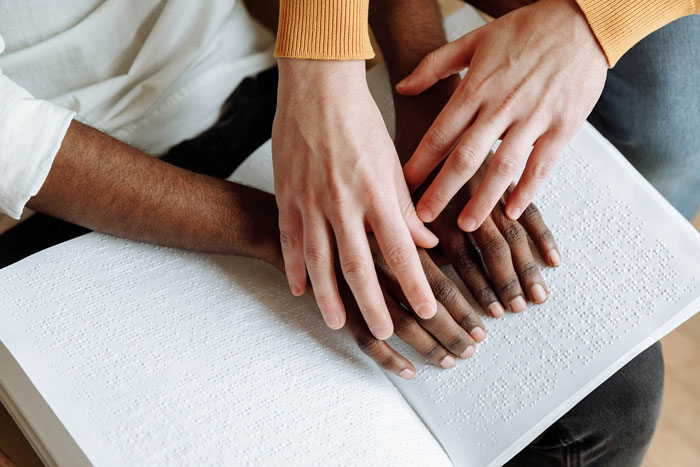
Thirdman/Pexels.com
In the early 1990s when I was exploring my vocation to ordained ministry, I was also losing my sight. I have an inherited progressive eye condition that destined me to become blind. As I tried to navigate the complex hurdles of the discernment process and the possibility of training, it was obvious that it would be much easier with sight. I had been praying for many years for a miracle. Praying that one day I would be able to join this man in John 9 and say, ‘I once was blind but now I see.’ But I continued to lose my sight and became registered as blind. Healing in the form of the restoration of sight did not happen, but liberation came in a different way. At the time, computers were relatively new, and screen readers and technology that make it possible to use a computer without sight were only just being developed and very expensive. As I prayed for healing and the ability to continue to pursue my vocation to ordination, I began to realise that God was answering me in a different way. God answered my prayers in the form of grants and gifts and the generous fundraising of others which led to the sum of £11,000 to buy all that I needed to go to theological college to study.
I was still blind, but I was liberated from the restrictions this placed on me and able to follow God’s call to ordination and into the ministry in which I’ve now been for over 30 years.
Some have reflected on the healing of another blind man, Bartimaeus in Mark 10. How would a 21st century Bartimaeus answer Jesus’ question, ‘What do you want me to do for you?’ (Mark 10:51). Maybe not with, ‘I want to see,’ but rather, ‘I want a computer with access technology, an employer who will give me a job, a guide dog so I can be mobile, and a home so that I can live independently and safely.’
Jesus' challenge to us
In Jesus’ 1st century world, the only pathway to liberation and justice and restoration for disabled people was healing. Today there are many pathways to living full, active and fruitful lives for disabled people, but many barriers still exist: physical, organisational, institutional and attitudinal - and many disabled people still find they are pushed into marginal places of dependence, living diminished lives and having their voices ignored.
Jesus’ challenge to the 1st century society in which he lived is still a challenge to us today: ‘he was born blind that the works of God might be revealed.’
- How does the church release and enable disabled people to reveal the works and glory of God?
- How are disabled people able to fully belong and participate in the life and ministry of the church?
- Do we recognise the full personhood and God-given gifts and talents of all people, including disabled people, or are we like this blind man’s neighbours who only see him as a blind man and not as a person?
- Can we really take on the challenge of Jesus’ words that the work and glory of God would be revealed through him and allow God’s work and glory to be revealed through those who bring disability and difference into our churches today? Not in their healing, but in their liberation to be able to fully belong and participate and reveal the works and glory of God amongst us, just as they are.
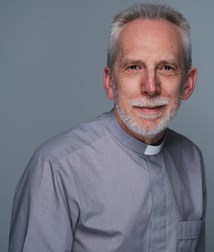 |
Revd Prebendary John Beauchamp was ordained in 1994 and served for 28 years in parishes in Suffolk and London with the help and support of his wife Natalie and his guide dogs.
|
In his current role as Diocesan Disability Ministry Enabler in London, he supports individuals who bring disability or neurodivergence as part of their gifting to flourish in ministry and helps churches to become places of full belonging and participation for disabled and neurodivergent people.
Discover more about his work and access a range of resources, including ‘Strength made perfect’, a six-session study course about disability and the church. John is blind due to retinitis pigmentosa, an inherited degenerative retinal condition.
As well as his disability work, John is the author of numerous stories and sketches for use in worship for children and adults. You can find these at www.kingdomstory.net
Not a Roots subscriber?