Steve Taylor, co-vicar with his wife Ali at St Paul’s Church, South Harrow, helps us explore Pentecost as we experience and model intercultural and intergenerational church.
Introduction
Pentecost is the name of the day when the Holy Spirit came to the Early Church, depicted in Acts 2:1-17. Many churches remember and celebrate this on Pentecost Sunday, seven weeks after Easter Sunday.
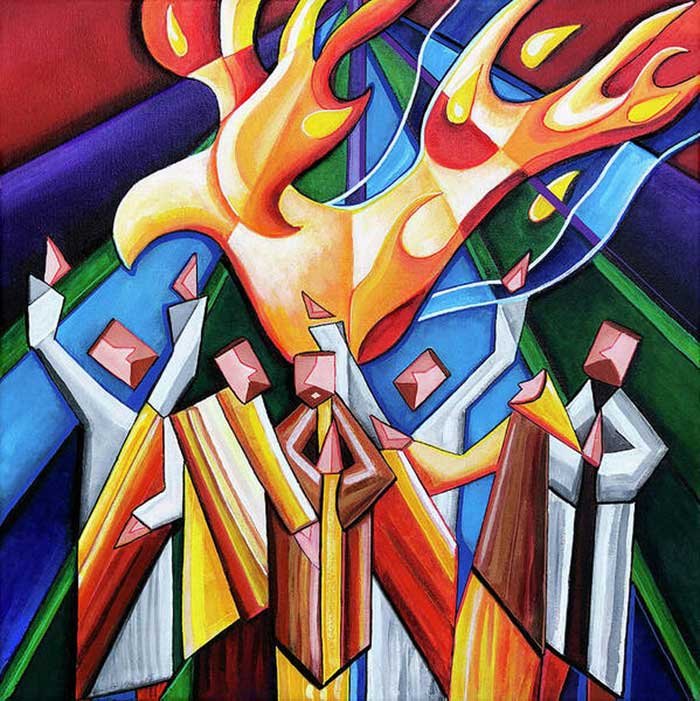
Jennifer Allison
Somewhere to start
Who’s here?
You will need: sticky labels and pens for each person, a globe or world map.
- Ask everyone to think of the people who have shaped their cultural identity. These could be parents, grandparents, or anyone who has had a significant impact on their life. Where would they say they come from?
- Ask them each to choose the person who would say they are from a place furthest from where you are now. Invite everyone to write this person’s name and the place they are from on a label and stick it to themselves.
- Look at the globe or world map together and point out where some of these places are. Spend some time sharing about the different places and cultures that have shaped people.
God of all nations,
thank you for bringing us from so many different places
to be here together today.
Help us to see all the good things we bring
when we come together as ourselves.
Amen.
Something from the Bible
Acts 2:1-17
A read and share idea
You will need: pieces of A4 paper with the different nations named in the passage written on each one (see below), several pieces of A4 paper with ‘Northern Galilee’ written on them.
- Hand the pieces of paper out to people. Have a small number of people stand near the person reading out the passage. These people should all carry a piece of paper marked ‘Northern Galilee’.
- As the passage is read out, those with the ‘Northern Galilee’ signs should stand by one of the other place signs, indicating the cultural mismatch being described.
|
Nations named in Acts 2:9-11
|
|
Parthians (Iran)
|
Medes (Iran)
|
|
Elamites (Iran)
|
Mesopotamia (Iraq, Kuwait, Western Syria)
|
|
Judea (Israel & Palestine)
|
Cappadocia (Turkey)
|
|
Pontus (Turkey)
|
Asia (Turkey)
|
|
Phrygia (Turkey)
|
Pamphylia (Turkey)
|
|
Egypt (Egypt)
|
Cyrene (Libya)
|
|
Rome (Italy)
|
Cretans (Crete)
|
|
Arabs (Saudi Arabia)
|
|
What could we learn from this passage?
The Holy Spirit fell at a specific point in the Jewish year. Jews and God-fearing Gentiles from around the known world would travel each year to the Temple in Jerusalem for the harvest festival of Shavuot - a feast celebrating the first fruits. This timing is significant and tells us something about God’s heart and design. After hearing Peter’s Pentecost sermon, many believed in Jesus. Are these new followers the ‘first fruits’ of the Global Church?
Crucially, the miracle of Pentecost is not that people from around the world learned a single language, but that uneducated fishermen from a remote part of Israel were enable to speak those languages. God spoke in the language of each hearer. All cultures were included in hearing the good news of Jesus, and all ages were included too. Children were part of Pentecost as extended families travelled to Jerusalem together. They would have lasting memories of the sights, sounds and tastes of festivals there, mingled with their experiences of home. Imagine being a child or young person at Pentecost in Acts 2. What would you have been feeling, expecting, noticing?
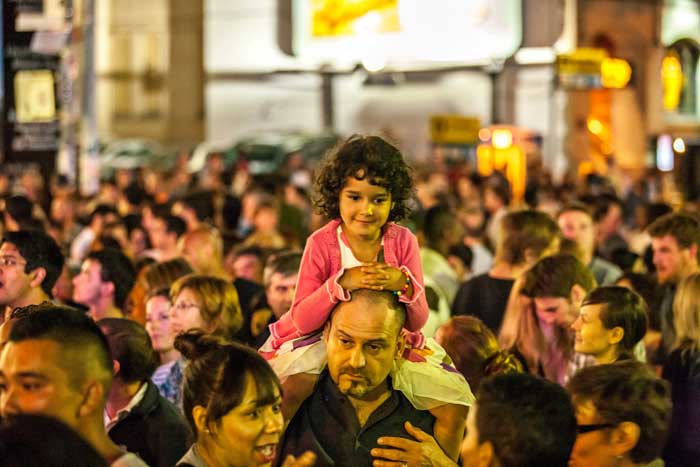
Pentecost is a reminder that God’s Church is designed to be intercultural and intergenerational; building relationships, learning, worshipping and serving together. This is not simply a church with a diverse multi-cultural, multi-lingual, or multi-generational congregation(s). Pentecost communicates the importance of intentionally creating spaces where everyone feels valued and unified in their faith, across cultural boundaries.
tirc83/istockphoto.com
Explore & respond
Talking languages
Who can speak another language?
- Give everyone a chance to share something from a different language that they know. This can be as simple as ‘1,2,3’ from a language they learned at school.
- Ask people about their experiences of listening to someone speaking in a different language. How did they feel when they couldn’t understand? Have they ever had a breakthrough in understanding a different language? How did that feel?
- Finish by learning a simple prayer in different languages, such as ‘Come Holy Spirit’. Ask native speakers to teach pronunciation and have everyone repeat it aloud. Consider including sign language as well:
Party planning
A creative activity to capture the celebration of Pentecost
You will need: paper and coloured pens.
Pentecost is the Church’s birthday. Reflect on how you throw a party.
- Ask people to describe or draw what goes into a celebration in their home or in the home they grew up in.
- Most parties involve food. Invite people to design a dream menu for their party. Could any of the foods be included in a church meal in the future?
Shaped by culture
A reflective exercise
- In small groups, invite people to discuss things that they see as part of their cultural heritage. These could be traditions, spiritual practices, favourite foods, or behavioural norms for being polite, hospitable, or respectful. If people have been in situations that are culturally unfamiliar to them, this might have highlighted different ways of doing things.
- Then ask people to think about the positive aspects different cultures bring to the church. You could show Treasures of the nations, a short video of different people sharing what they see as God’s gift of faith in their culture.
How we see Jesus
Reflecting on images of Jesus from different cultures
You will need: ability to show images of Jesus from artists with a variety of cultural backgrounds.
Share paintings of Jesus from artists around the world.
In small groups, discuss which painting you are drawn to and why? Do you feel different cultures notice different things about Jesus? Do we gain a better understanding of Jesus when we see him through many different perspectives?
You may also want to look at examples of different cultural perspectives on Bible passages e.g. the prodigal son. After reading the story of the prodigal son, people from different cultures were asked ‘Why did the prodigal son end up in the pigsty?’
- Americans/Westerners said it was because he squandered his money, emphasising personal responsibility and guilt.
- Russians interviewed said it was because of the famine, an unavoidable tragedy, highlighting our shared human experience of suffering.
- Tanzanians said that it was because none of his neighbours helped him out, underscoring the importance of social responsibility and the failure of the surrounding community to care for a person in distress.
- The original Middle Eastern audiences and modern Asian communities may see the story through the cultural values of honour, shame, and family duty. Asking for his inheritance early would have been a profoundly disrespectful act, akin to wishing his father dead, bringing great shame upon the family. The father's act of running to meet his son would have been culturally shocking and humiliating for an older man in that society. This act is seen as the father deliberately taking the son's shame upon himself to protect him from community ostracization (the kezazah ceremony).
- Indian artists [Andrew Peter Santhanaraj Prodigal Son (1962) and Frank Wesley (1923–2002), an Indian-Australian artist, Forgiving Father (20th century) have reimagined the son as a member of a discriminated-against caste, emphasizing social justice and liberation. The father's embrace of a bare-bodied, emaciated figure from an ‘outcaste’ background serves as a powerful symbol of divine love that transcends social stigma and embraces the marginalized.
References
Munson missions: Cultural Perspective and the Prodigal Son
Sola network: How Asian Americans Connect With The Parable Of The Prodigal Son
The visual commentary on scripture: The prodigal son
Global movements kites
A craft activity to think about movement
You will need: a large world map, squares cut from coloured paper, string or yarn, coloured pens, embellishments for decorating, ribbon.
- Using a large map of the world, invite people to think about where there has been movement of people. Examples might include: Romans and Anglo-Saxons coming to Britain; Irish and English moving to America in the 1800s; ‘ten-pound Poms’ sailing to Australia; the Great Migration of Black Americans escaping racial violence; the Windrush generation moving to the UK; open borders across the EU that allowed freedom of movement.
- Invite everyone to take a kite shape and write or draw about people who have moved. This can be individuals they might know who have moved for study or work, or large-scale migration due to war or natural disaster. They can decorate their kite with embellishments and add a string with ribbon bows.
- Place the kites on the world map and sensitively reflect on how people have always been moving, like the wind of the Spirit, adapting to new locations. Ask: Is it hard to move? Is it hard to see change in your area? How can church be a home away from home? How could those coming to our neighbourhood from other parts of the world be God’s gift to us?
More resources on mission and migration
Somewhere to finish
You will need: sticky notes, pens, a wall or board to stick them to.
- Ask people to take some sticky notes and write down cultural practices they have heard about during the session that they would like to experience. Encourage them to write at least one that is outside of their home culture.
- Set up a wall/board and invite people to put their sticky notes onto it. Gather around the board and discuss which practices currently have a place in your church. What might bless or challenge you if you were to try them? Who might be able to help others experience one of these practices?
- You might like to leave this board up in a prominent place and post photos and stories of people engaging with these new cultural experiences in the coming weeks and months.
Loving Lord Jesus,
you sent your Holy Spirit at Pentecost
and revealed yourself in each person’s language.
Kindle your Spirit again in us today
that we may speak to those around us in ways and words
that they understand most. Amen.
Follow-up ideas
- If your church has mission partners overseas, you could ask for details of how they worship and celebrate and try some of their practices out in your services.
- Encourage families and small groups to take time to ask one another about their preferences for church worship and personal prayer. What has been passed down from previous generations, and what have they learned from surprising places?
- Explore hymns and songs of praise written in other languages:
Suggestions